





In Conversation With: Philippe Malouin
We've played host to icons and award winners of all shapes and sizes at our showroom, but it is not very often you get to pitch questions to a Compasso d'Oro recipient themselves. A true journeyman of design (in the figurative and literal sense), today's interviewee began his design journey in Eastern Canada and, after a creative pilgrimage across continental Europe, settled his talents in East London. A mastermind of everything from lighting to lounge seating, educational lectures to espresso makers. Philippe Malouin is the quintessential designer's designer. Creating things not because they necessarily work within the boundaries of today's trends but in the direction of his own curiosity and better understanding.
To celebrate the arrival of an incredible third variation of his DS-707 collection here at our showroom, we sat down with someone who is currently a huge part of the design story at Chaplins. This is our conversation with Philippe Malouin.
DS-707 Chair by Philippe Malouin for de Sede
Bilboquet Lamp by Philippe Malouin for Flos - Photo: Pablo di Prima
Hi Philippe, thank you for joining us. It is a pleasure to meet you, especially at such a pivotal point in your career.
"Thank you, that’s very kind of you!"
I wanted to begin, well, just there, at what point did you know that design was the path you wanted to pursue?
"The clearest point was during a foundation course, when I was trying different disciplines and found myself drawn to industrial design. I’d always made things growing up; we had a workshop at home, and I spent a lot of time there. Discovering that this interest could become a profession made sense to me. It gave direction to something I was already doing."
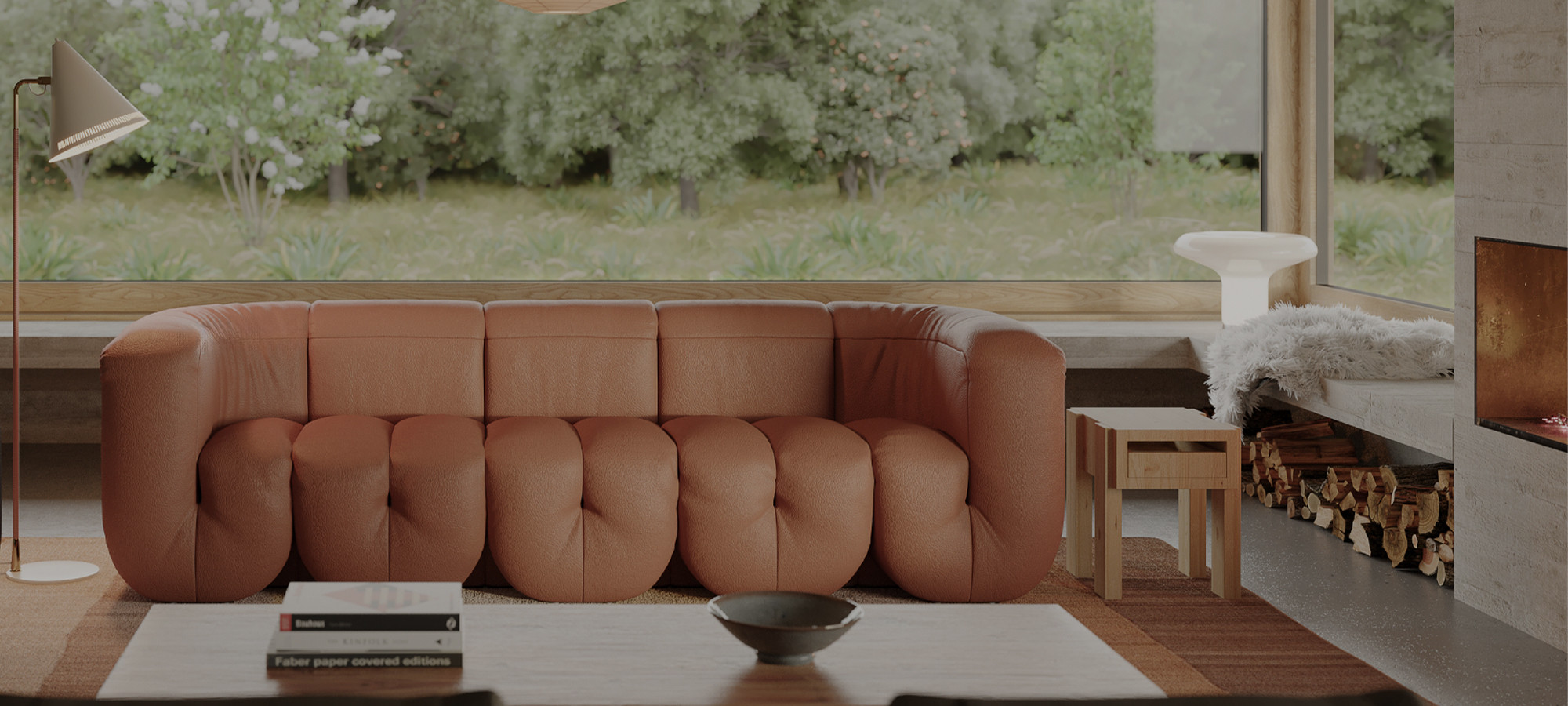
DS-707 Sofa by Philippe Malouin for de Sede
DS-707 Chair by Philippe Malouin for de Sede
As a young designer, what was it like making the leap from university in Montreal to studying at a dedicated design school in Europe? How did that transition influence your approach to design?
"I studied industrial design in Montreal, then ended up in Eindhoven, which was an art school heavily focused on experimentation and process. That combination definitely shaped the way I work. Montreal gave me an understanding of how things are made, while Eindhoven encouraged me to experiment and see where the process could take me. Those two approaches are really the basis of what I do today."
Talking of moving from Canada to Europe, you've been based in your East London studio for around six years now. Do you feel that being surrounded by one of the capital's most creative communities influences your design process?
"I’ve actually been in the same building for around 15 years, although I’ve moved between spaces within it. East London has been very good to me. Having friends and other people who make things nearby is important; those relationships make a place feel like home. But I wouldn’t say good work depends on being in a particular postcode. What I need day to day is somewhere I can concentrate, a large table and a workshop where I can make a mess. The studio gives me that."
DS-707 Sofa by Philippe Malouin by de Sede
When you're making that mess, you've previously mentioned that you prefer to avoid trends, as they can tie a design to a particular period. Have there been any trends that you've found irresistible despite this?
"I’m sure I’m influenced by things around me more than I realise. Nobody works in a vacuum. I wouldn’t reject a colour or a material just because it happens to be fashionable, but I try to understand why I’m drawn to it. Would I still want to use it if I stopped seeing it everywhere? I want someone to keep enjoying an object after the initial excitement has worn off."
Are there any of those materials or technologies you haven't yet explored that you'd love to incorporate into your work?
"There are always processes I’d like to understand better. Often the interest begins with meeting someone who knows how to do something I don’t. You see what they can achieve with a material, and that opens up possibilities. I like starting from that curiosity and seeing whether it leads to a useful idea."
Philippe Malouin
Ta.Be.Ce. Coffee Table by Philippe Malouin for Zanotta
You've gone back to education in recent years, but in a lecturing role. When teaching the next generation of designers, is there one piece of advice or a particular principle you always emphasise?
"Make things. You learn an enormous amount by physically working with a material, including things you wouldn’t discover through drawing. If you’re stuck, give yourself a constraint: one material, one tool, one way of joining things. Having every possibility available can be quite paralysing. A limitation gives you somewhere to start."
On the topic of influential things, you once mentioned that you first discovered de Sede in a music video. Can you remember which one it was and what first caught your attention?
"I honestly can’t remember which video it was. I remember the DS-600, though. Clearly, the sofa made more of an impression than the music video"
DS-600 'Non stop' Sofa by de Sede
The DS-707 appears to have come together through a particularly intuitive creative process. Is that simplicity typical of your work, or do your designs usually undergo a longer period of development? And does a more straightforward process make a project more enjoyable?
"The initial gesture was simple: folding a piece of foam in half and then folding it again. But that was one of several experiments, and turning it into a comfortable, manufacturable piece took a lot of development. Getting the leather to retain that tension was particularly challenging. I often work intuitively at the beginning, but there’s usually a long process of testing and adjusting before something feels resolved."
Does the 707’s simplicity make it more enjoyable?
"Yes, I think there’s something satisfying about being able to understand its form quite quickly. You can still recognise the folded gesture in the finished piece. It has a strong character, but you don’t need an explanation to enjoy it. Hopefully, you just want to sit in it."
What, for you, is the single most important quality a sofa should possess?
"Comfort. It sounds obvious, but a sofa has to make you want to sit down and stay there. The proportions, the support, the way the material feels against your skin—all of that matters. You can make something visually interesting, but if people don’t enjoy sitting on it, you haven’t really done the job.."
DS-707 Chair by Philippe Malouin for de Sede
DS-707 Sofa by Philippe Malouin for de Sede
You've spoken about wanting your designs to become heirlooms, pieces that can be passed down through generations. Did de Sede's exceptional attention to material quality and craftsmanship make the collaboration a particularly natural fit?
"Absolutely. If you want someone to keep a piece for decades, the materials and construction have to support that ambition. The quality of the leather and the upholstery is a huge part of the DS-707. I like the idea that a piece acquires character through use, and that someone becomes more attached to it over time."
What was it like receiving the Compasso d'Oro? Did you have any idea the award was coming, and what did that recognition mean to you?
"I knew we’d been nominated, but I only found out we’d won a few months before the announcement. It was quite insane, honestly. It’s an award with such an incredible history, so receiving it for Bilboquet was a huge honour. It also recognises all the work that went into the project with the team at Flos."
Bilboquet Table Lamp by Philippe Malouin for Flos
Bilboquet Table Lamp by Philippe Malouin for Flos - Photo: Pablo Di Prima
If you could own just one piece from de Sede's entire collection, which would you choose? And extending that to the wider world of furniture design, what would be your ultimate piece to own?
"Definitely the Non Stop. I’d love to have a house large enough to accommodate a really long configuration. That’s part of what makes it so extraordinary: seeing that continuous form stretch through a room. So perhaps the house needs to come first."
Same question, but for furniture in general?
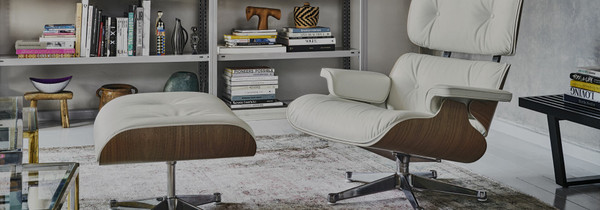
"I’ve actually just bought an Eames Lounge Chair for my house in Spain. I’d wanted one since I was a young teenager, after seeing it in a skateboard ad. It stayed with me all those years, and now that I finally have one, it’s everything I thought it would be. Such a great piece of design."
Eames Lounge Chair Atelier at Chaplins
DS-600 Sofa by deSede