









The History of the Togo Sofa
- Discover the story behind one of the most recognisable sofas in modern design
- Explore how the Togo challenged conventional ideas from day one
- Learn how it embodied the design characteristics of its time
- Discover how Ligne Roset stayed in touch with both tradition and modernity
- See how new generations are discovering the Togo as a social media sensation
- Explore the collaborations and limited editions that define it
- Read about the part the Togo has played in our design story
Togo Fireside Chair
Togo Small Sofa
Very few pieces of furniture achieve a level of stardom that catapults them beyond recognition for being a comfortable seating solution or a clever piece of design. Even fewer still manage to maintain that acclaim for revolutionary style and pioneering comfort 50 years after their original conception. But the Togo sofa, as many of us will know, has never been one for upholding the norm. A staple of celebrity homes, movie sets, ad campaigns and the living rooms of design enthusiasts the world over, Michel Ducaroy's marvel is particularly unique, as both furniture purists and those just looking for a strong statement piece love it equally.
From humble, fluoride-filled beginnings (stick with us for that reference) to internet stardom, the Ligne Roset flagship sofa comes not just with layer after layer of cushioning, but with a story to tell any who take a seat within its low-slung embrace. So we thought we'd try to capture that history, from birth to everlasting life, for both the initiated interior lovers and the sofa-buying newbies. This is a brief history of the Togo sofa.
Togo Sofa Collection
Where did it all begin?
The Togo's journey begins far earlier than its initial production in 1973. More than a century before, in fact. The Roset family began their story as many influential design empires did (See Cartier, Louis Vuitton, Hermès), in 19th-century France. Antoine Roset, pater familias of the dynasty and great-grandfather of current Directors Pierre and Michel, opened a parasol-making factory in the mid-1800s that in time would later shift their output heavily in the direction of contract furniture, supplying en masse to places of education, welfare and relaxation. This was part of a gigantic effort in the public regeneration of post-war Europe.
After a decade of building for purpose and practicality, the 60's saw design intentions switch to style and aesthetics. It was around this time Jean Roset met designer Michel Ducaroy, and with this interaction a friendship came to pass that would put the wheels in motion for the creation of Michel's magnum opus. Roset saw the industry demands change early, and began championing creative, passionate designs that were destined to disrupt the retail market. Before long, Ducaroy was appointed head of design for the brand new (literally in this sense) 'Roset' company and, in a move that still resonates throughout, brought to life his Togo sofa. The original inspiration of which coming from a rolled-up toothpaste tube.
Making its debut at the Home Economics show of 1973, it panned reviews and drew apprehension due to its lack of a base, but went on to win both awards and the continuous adoration of design enthusiasts. Thus sparking a complete redrawing of the boundaries of what furniture could be.
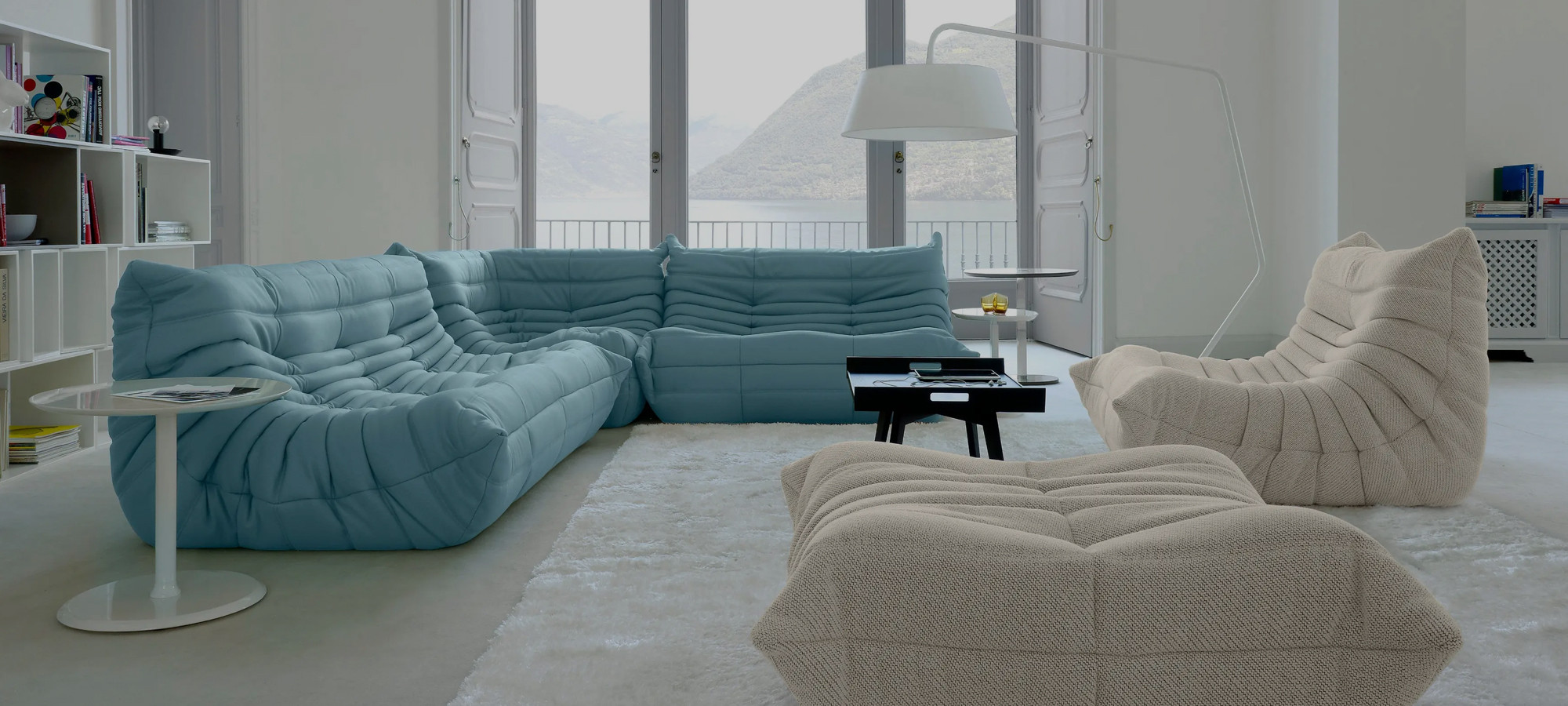
Togo Corner Group
Michel Ducaroy
Togo Corner Group & Fireside Chair
A product of its time
The Togo sofa embodies and highlights many of the key characteristics that defined the mini-renaissance taking place throughout the 60s & 70s. Let's focus on three key elements that made it bold, brilliant and a symbol of a changing social landscape.
Modular: Lounge seating up until Ducaroy's time was considered a bit of a blunt instrument. It tended to stick to the 4-legs, 3-seats, 1-idea policy. As we welcomed this far more open-minded era, the mass communication of ideas through international media opened up a world that had so much more to offer us. Including within our own four walls. The home went from being a place to live to a gallery of self-expression, ideas and limitless possibilities. Even your sofa was adjustable at the whims of your aesthetic desires for the day.
Low Slung: As previously mentioned, the largest point of contention when it came to the Togo was its lack of base. It hugged the ground as closely as it could, offering a more free-flowing home, both visually and physically. This low-and-slow nature meant that spaces had fewer obstructions in the eyeline, making rooms feel larger and more communal than ever before.
Social: Part of the human condition dictates that when encouraged to socialise, we do just that. So when Togo offered a combination of the two aforementioned, it provided a seating solution that could transform a living room into a mobile conversation pit. A lounge corner sofa could undergo a form of mitosis, becoming an entire lounge setting for you and your nearest and dearest.
Togo Small Sofa
Archival Togo Sofa Advertisement
Staying relevant while staying traditional
As any celebrity will know, becoming popular is relatively easy; staying popular is where the hard graft begins. It is easy to be curious about something fresh and exciting, but as we approached the 90s, a wave of muted professionalism arrived with it. A palette of greige and glass, simplified shapes and conforming designs, a sort of pushback to an earlier counter-culture. How did the Togo maintain its name as one of furniture's most desirable? Well, other than having style ahead of its time, the sofa does three things incredibly well.
The human touch: 12-18 months. That is how long is required for each trained artisan to learn how to make Ligne Roset's comfortable cornerstone. That dedication to design assures one thing that buyers of luxury desire above all else. Quality. You can create a piece that lends itself to trends and fleeting ideas. But in the world of high-end design, if you don't make it right, you can be certain you won't be making it for long.
Famous friends: From Lenny Kravitz to Avril Lavigne, Colman Domingo to Clara Cornet. The sofa's longevity is thanks in part to its ability to stay in the public eye. It is a favourite of the rich and famous, and the nature of celebrity culture makes this piece desirable no matter the latest flash-in-the-pan trend.
Keeping it fresh: Great design can only get you so far before it needs the slightest tweak. Ligne Roset are masters at subtly refreshing an old favourite. A recent collaboration with Hugo Boss led to a stunning half-leather, half-fabric seat combining two names that have dominated their respective industries for decades. Their anniversary specials utilise limited-run fabrics and even junior versions of the Togo, so that the entire family can enjoy a bit of Michel Ducaroy magic.
Togo Sofa by Ligne Roset
Togo 50 Fireside Chair
Togo BOSS | Ligne Roset
Social media stardom
The Togo sofa (along with the Eames Lounge Chair and the Camaleonda Sofa) has become a symbol of retro design among the hive minds on platforms like Instagram, Pinterest, and TikTok. The homes of influencers and the topics of video essays worldwide contain Togos galore. Whether someone is finding their feet in design or is a seasoned veteran of the interiors world, they're immediately met with content alluding to the Togo being that "viral retro sofa" and an icon of style history that is being displayed in countless ways throughout homes across the planet.
Togo Sofa Campaign
Togo Sofa via @Chaplinsfurniture / @Ligneroset /@romaincosta_
Ligne Roset & Chaplins
We work to an extraordinarily personal level with all of our brands, and the shared history between Ligne Roset and ourselves stretches back further than almost any other. To say the Togo has become part of the furniture here at Chaplins is an understatement. Wherever our stores and spaces have been, past and present, and undoubtedly in the future. We feel very lucky to have helped bring such an iconic piece to so many throughout the years and to have played a small part in a very long story.
Our 25,000 sq ft showroom is never short of Michel Ducaroy's creations. Featuring everything from the Togo to the Kashima and a myriad of others, so we can keep the physical presence of beautiful design alive.
Togo Corner Group at Chaplins
Togo Corner Group at Chaplins
Togo Corner Group at Chaplins