





Making the Most of Your Space
They say size doesn’t matter and that may well be true. One place it most certainly isn’t, however, is within the four (or more) walls we call home. Our spaces are an extension of who we are. We wouldn’t choose to be the smallest version of ourselves, and the same applies to our interiors. Unfortunately, we don't live within the realm of permanent design software. Walls can’t simply be picked up and moved, and extensions don’t arrive at the click of a button. These things take time, money, and—more often than not—planning permission.
So, while you wait for your local council to respond, we’ll let you in on a few industry secrets: how to create space where there appears to be none. The ways interior design wizards conjure room within a room, generating a sense of openness out of thin air. Consider this your all-encompassing guide to making the most of your home—no sledgehammer or form 45-881B required.
DS-707 Sofa by deSede
Keep a low profile.
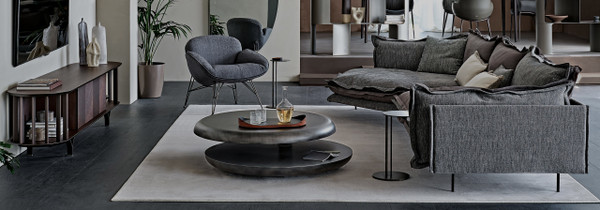
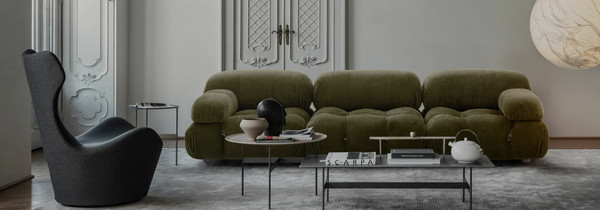
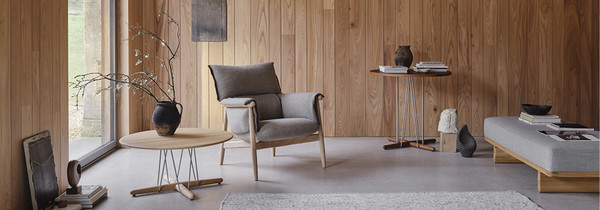
Let’s start with what we know best: furniture. While it may take up floor space, somewhat counterintuitively, one of the most effective ways to create a sense of space is by filling it. Opting for low-profile, laid-back pieces helps a room feel complete while maintaining a clean, uninterrupted line of sight that doesn’t overwhelm the senses. The result is a more expansive view of your surroundings — one that flows freely, rather than being broken up by eye-level pieces that can fragment the space.
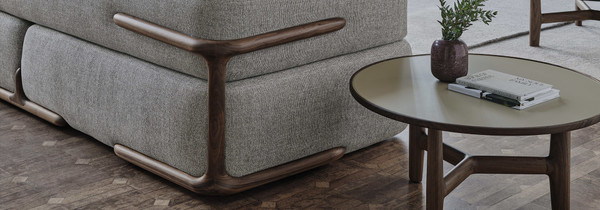
To really perfect the low-profile look, try embracing Eero Saarinen's "eliminate the slum of legs" adage. Grounded pieces are the ultimate expression of low-slung luxury, allowing the eye to travel effortlessly across the room without getting caught in a forest of supports.
Odile Coffee Table by Molteni & C
Saparella Collection by Ligne Roset
Cassina Lounge Seating
Let there be light
Nothing accentuates the grandeur of a space quite like inviting in the natural light beyond it. After all, it’s travelled 93 million miles to reach you—you may as well meet it halfway (figuratively speaking). So, you’ve drawn back the curtains, opened the window, and perhaps even exchanged a polite wave with the neighbour. Simple enough. But there is one key consideration if you want to make the most of our closest star.
Light doesn't travel in a single, sharp direction. It's radial. You have to imagine it like a liquid. It permeates rooms from every possible angle. This means that even obstructions on either side of your windows are indirectly limiting the amount of illumination your space is receiving. Our advice? Move the tallest objects away from the perimeter of the window, thus allowing them to be highlighted in a natural glow, but also negating any loss of daylight.
Maxalto Collection
9000 Sofa by Arflex
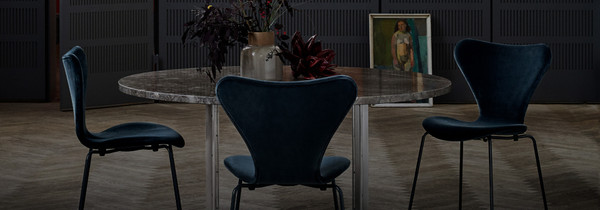
Saarinen Dining Table by Knoll
Mirror, Mirror
Mirrors are the original optical illusion. While most homes don’t require a Houdini-level sleight of hand, a well-placed reflective surface can perform one of the most effective spatial tricks: visually doubling the area it faces. Paired with the earlier principle of open sightlines, a standing mirror can almost feel like unlocking another dimension within your home — provided it reflects open space, rather than the back of a sofa. They’re also particularly effective in transitional areas such as hallways and landings, where their minimal footprint delivers maximum impact.
What would we suggest? When it comes to glass, it pays to look to the specialists. Pieces from Deknudt, Glas Italia or Fiam Italia are consistently among the most sought-after—and for good reason.
Giove Mirror by Porada
Scribble Mirror by Glas Italia
Caadre Floor Mirror by FIAM
Floor flow
We’ve covered windows and walls, but what about the literal ground beneath our feet? The floor is what guides movement through the home. Without getting too holistic about it, your floor space forms the natural path you — and, in turn, your interiors — follow. Dressing it thoughtfully creates a sense of unity between rooms, bringing a subtle synchronicity to the space. The result is a home that feels cohesive and expansive, rather than a series of disconnected areas.
Elongated rugs that run from one room into another (hallways included) are an effective way to achieve this continuity. On a larger scale, opting for a single flooring material across adjoining spaces, such as living and dining areas, delivers the same seamless effect.
Lines Rug by GAN
Helga Runner Rug by Fabula
Multi-functional furniture
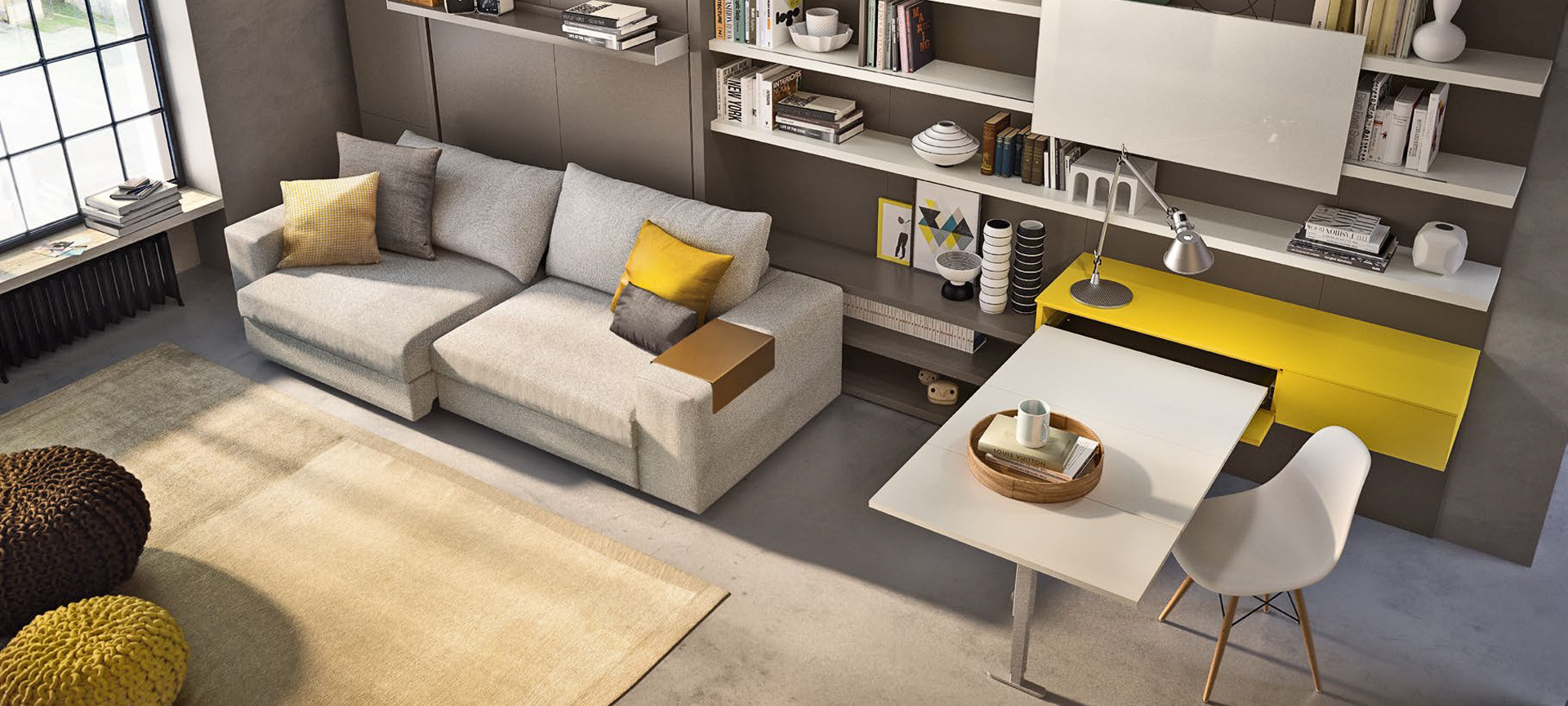
The technology behind dual-purpose furniture has come on leaps and bounds in recent years—now combining practical ingenuity with near-invisible design, all without compromising on comfort. Where once these pieces fell short when stretched across the board, today’s best-in-class solutions have rewritten the script entirely, allowing rooms to become as multifaceted as the lives we lead.
One brand, in particular, stands above the rest: Clei. Transforming spaces since 1963 (both literally and metaphorically), its designs shift effortlessly from desk to dining area, from sofa to sleeping arrangement, all with an understated elegance. The result is furniture that maximises both the usability and the value of your space, without ever feeling like a compromise.
Clei Collection
Clei Collection
Clei Collection
Up, Up and Away
We began by championing the virtues of low-slung furniture, so it feels only right to end with a gentle contradiction: the quiet power of tall storage. Vertical space is so often overlooked in the pursuit of making more of our homes—our focus fixed firmly at eye level, while everything above it goes largely unnoticed.
Yet this upper plane offers an opportunity not just for storage, but for expression. A place for books, mementos, and carefully curated objets d’art, tall pieces draw the eye upward, subtly expanding the perceived scale of a room. More importantly, they extend the boundaries of a lived-in space. No longer confined to the horizontal footprint, your home begins to unfold vertically — becoming not just a place to live, but a layered chapter in your design story.
Selecta Bookcase by Lema
USM Soft Panel
Keen Shelving by Gubi