





Summer Trends: Soft-Angled Sofas
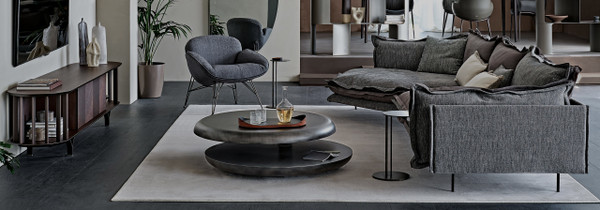
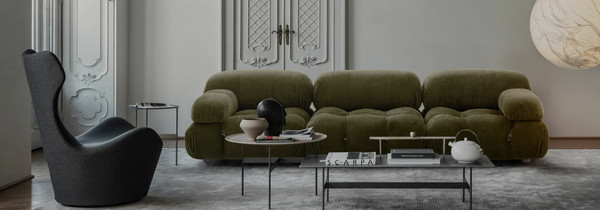
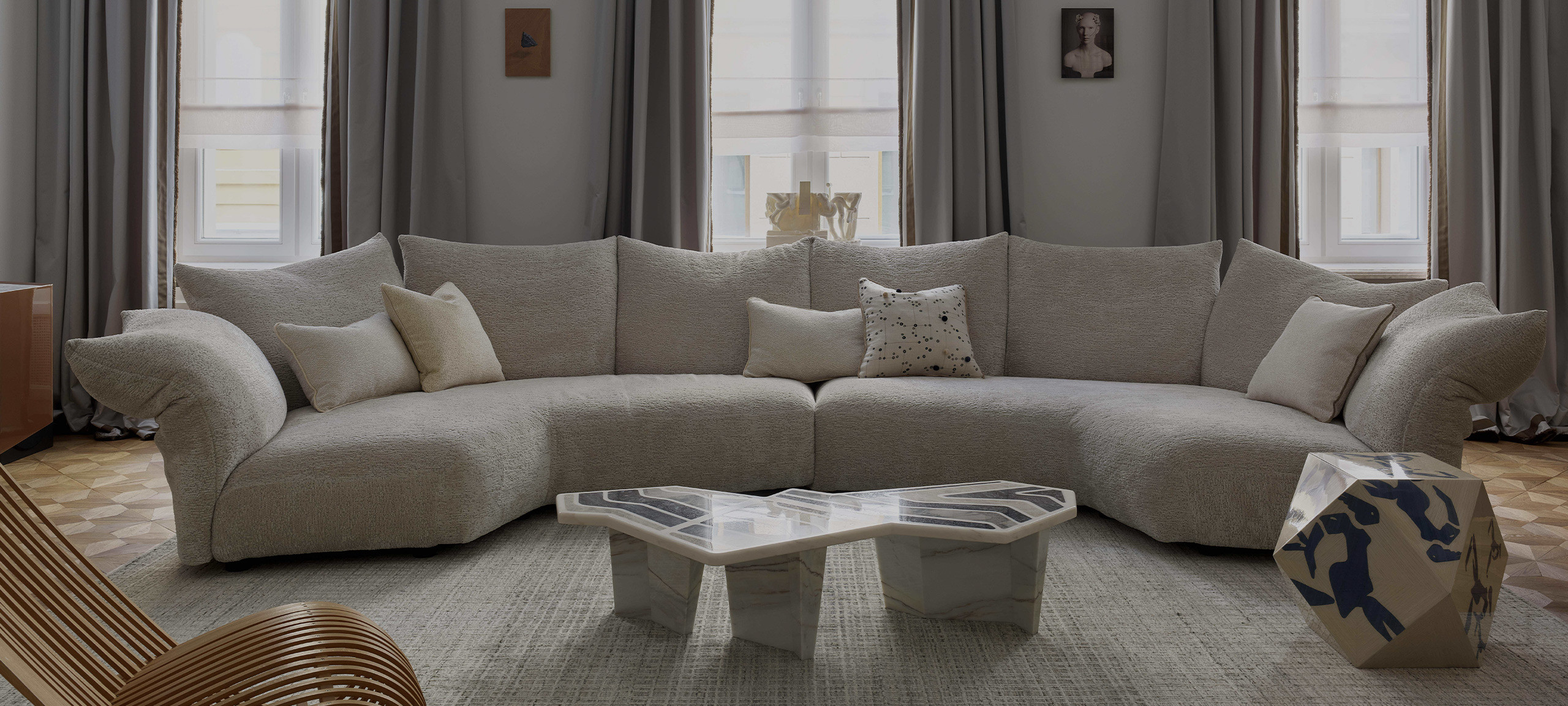
Sofa design has revolved around curves for a while now. A long while. Roundness, bends, arcs... everything’s been smooth. Well, no more – the Softly Angled sofa has entered the building. There’s no need to get your protractors out, just know that the points of these sofas are low key, the joins wide. Loose. Languid. L-shapes have relaxed, corners are calmer, and forms less rigid. The designs have the feel of casually- carved rock, of being eroded by the elements – a balance of structure and gentleness, high architecture meeting sink-into-me squishiness.
Dambo Sofa by B&B Italia
Douglas Sofa by Cattelan Italia
Abacus Sofa by Porada
Soft Angled sofas feel like the result of several recent trends in one. Roundness and curves. The organic. Asymmetry. The widening of sofa options. Do they come across as a compromise? Quite the opposite, they’re like the final creation after years of experimenting and testing. Eureka! To live with they’re simple, humble, and gently alluring, fitting into a room easily, working with all other shapes and bringing comfort without fuss or drama.
Lilum Sofa by Maxalto
Echoo Sofa by Living Divani
Emile Sofa by Molteni & C
How to work a Softly Angled sofa? Contrast against its geometry by pairing it with tactile elements like cushions and throws to balance things out, and furnishings that have either clean, straight lines or out-there curves for contrast and visual interest. Keep the surrounding decor minimal to let the sofa’s distinctiveness be the star of the show – make sure to position it somewhere it can be ooh and ahh’d over – and revel in a design rarity; something that’s bold and attention-grabbing, but never ostentatious.
Loungescape Sofa by Flexform
Edra’s Standard sofa by Francesco Binfarè is a much-celebrated Softly Angled sofa (which has just been refreshed for outdoor use), characterised by angles rather than sharp edges, its gently obtuse sections evoking rugged stone structures. The Loungescape seating system by Antonio Citterio for Flexform brings angular contours in via its base, which rises from the floor to elevate the piece at a gradual incline, lending it an off kilter feel. There’s also Lema’s Mirea sofa by Roberto Lazzeroni, which has a slightly faceted protrusion leg rest in place of the traditional L-shaped, or for something sleeker, try the angular version of Antonio Citterio’s Cocùn seating system for B&B Italia, where straight lines come together into a slow bend
Mirea Sofa by Lema
Absolu Sofa by Edra
Cocùn Sofa by B&B Italia